
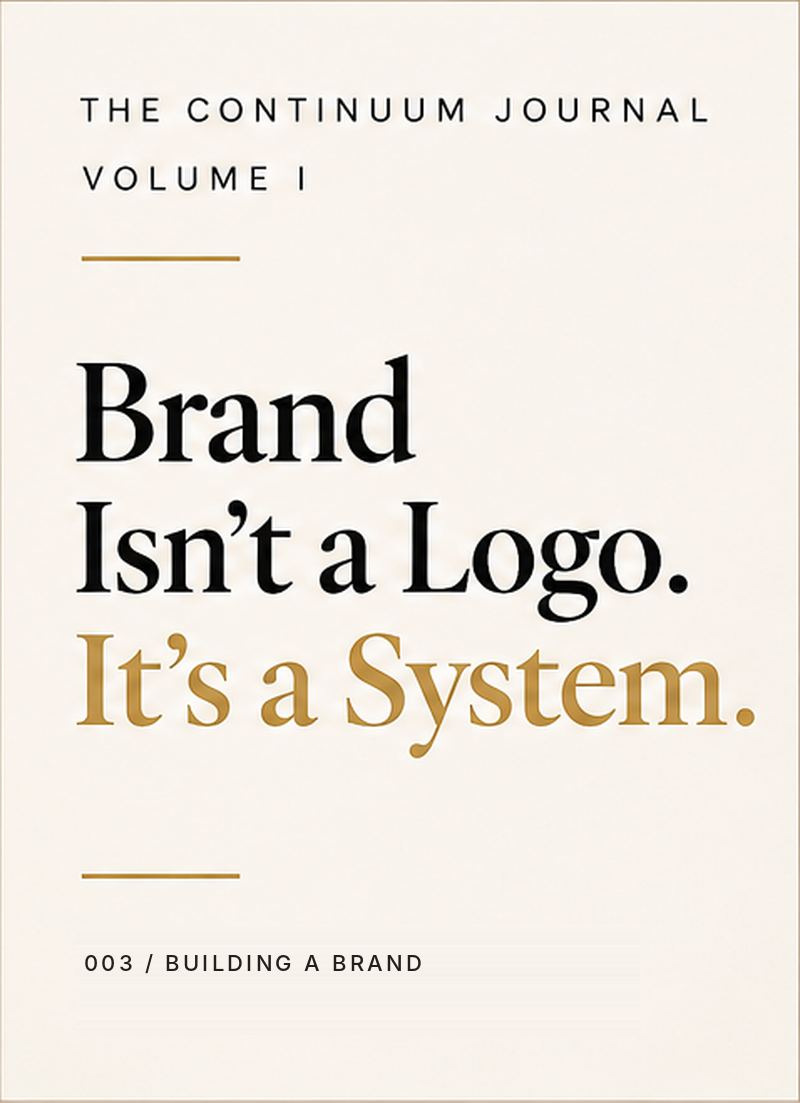
CONTINUUM JOURNAL / BUILDING A BRAND / VOLUME I / ARTICLE 003
A logo is a visual symbol. A brand is the experience behind it.
When organizations think about strengthening their brand, the conversation often begins with visual identity. A new logo. Updated typography. A refreshed color palette. A more modern website. These elements help create recognition, but they represent only one dimension of a much larger system.
A strong brand is built through the alignment of five essential elements: purpose, positioning, messaging, experience, and consistency. Each contributes to how an organization is understood, remembered, and trusted.
1. Purpose: Why you exist
Purpose defines the reason an organization exists beyond the products or services it sells. It helps clarify what the business is working to accomplish and gives employees a shared understanding of its direction.
Purpose does not need to be grand or abstract. It needs to be meaningful, credible, and connected to the business. Consider: Can your organization clearly explain why it exists and why that matters to the people it serves?
2. Positioning: How you’re different
Positioning defines the place a business intends to occupy in the minds of its audience. It answers whom the business serves, what value it provides, and what distinguishes it from alternatives.
Strong positioning requires choices. An organization cannot be everything to everyone and still expect to communicate a compelling difference. Consider: Can your customers explain why they would choose your business over another option?
3. Messaging: What you say
Messaging translates strategic positioning into language people can understand. It communicates what the business offers, why it matters, and what audiences should remember.
Effective messaging is not simply polished writing. When positioning is unclear, different departments emphasize different benefits. When positioning is strong, messaging becomes more focused. Consider: Does your organization communicate a consistent value proposition across its website, sales conversations, and marketing?
4. Experience: What people feel
Brand experience is created through every interaction someone has with a business, from the buying process to customer service and product delivery.
A business may describe itself as responsive, innovative, or customer-focused. Those qualities only become meaningful when customers experience them. Consider: Does working with your organization reinforce the expectations your messaging creates?
5. Consistency: How you show up
Consistency connects the other four elements. It ensures purpose, positioning, messaging, and experience reinforce one another over time.
Consistency does not mean repeating the same campaign indefinitely. It means maintaining a recognizable identity and coherent expectations even as the business changes. Consider: Do your teams, channels, and customer experiences reflect the same underlying direction?
When the system works together
When these elements align, your message becomes clearer, your team becomes more aligned, your marketing becomes more effective, and your brand becomes easier to remember.
When they disconnect, messaging becomes diluted, teams interpret priorities differently, and customers encounter experiences that do not match the promises they were given. These challenges are not always solved by changing the visual identity. They often require greater strategic alignment.
Build the system, not just the identity
A compelling visual identity can make a brand recognizable. But recognition alone does not create a strong brand.
That requires clarity about what the organization represents, differentiation in the market, consistent communication, and experiences that support the promise. The most effective brands are not simply designed. They are built through deliberate decisions connecting strategy with execution.
A question worth considering
If your logo disappeared tomorrow, what would people remember about your business?
Would they remember what makes you different? Would they recognize the experience you consistently deliver? Those answers reveal far more about the strength of a brand than its visual identity alone.
Build the system. Build the brand. Earn the trust.
Continuum Perspective
Build the system. Build the brand. Earn the trust.
CONTINUE EXPLORING
Explore more perspectives in The Continuum Journal, or start a conversation about aligning your brand with your business direction.